On this page11
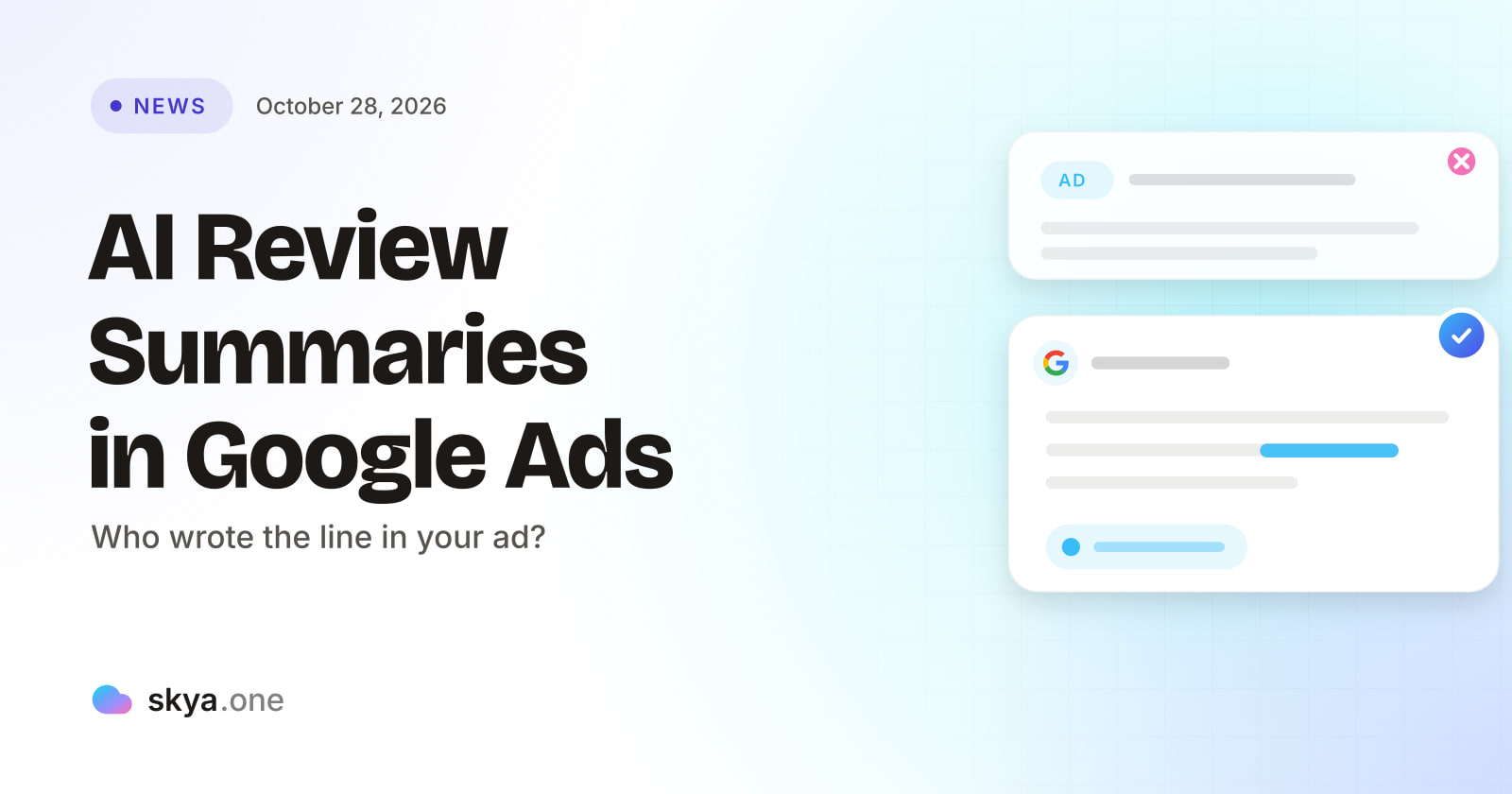
Google now documents AI-generated review summaries that appear directly inside Search ads. Search Engine Roundtable reported the help page on October 26, 2026. The summaries highlight positive insights from reviews across the web. Brand mention monitoring software now has to answer a harder question: what is the web saying about a client that an AI may quote in an ad?
What Google Published
Barry Schwartz of Search Engine Roundtable reported on the help document on October 26, 2026. Google’s page says “review summaries on Search are AI-powered summaries of online reviews that appear directly as part of your Search ads.” Its stated purpose is to “highlight positive insights from across the web to help potential customers evaluate your business.”
| Question | What the report says |
|---|---|
| What is it? | AI-powered summaries of online reviews, shown as part of Search ads |
| Which campaigns? | Search campaigns |
| Where do they show? | All positions on Google.com, on all supported devices |
| Which markets? | The US, Australia, the UK and India, in English |
| Which sectors? | All except sensitive categories, such as pharmaceuticals |
| What do they say? | Positive insights. The report says only favorable feedback is included |
| Where do the reviews come from? | “From across the web”, per the page |
The goal, in the report’s words, is to help shoppers feel more assured about what an advertiser offers.
Read the Feature Critically
Start with who this feature serves. By Google’s own description, its purpose is to make a shopper feel assured. That is a persuasion goal. It is not a goal of giving a balanced account of a business. This is not a flaw in itself, because every ad persuades. But a client should know that a persuasive summary now sits in their ad, and that they did not write it.
Next, look at the word “positive”. The report says only favorable feedback is included. A summary built that way is selective by design. Whether it is fair depends on the reviews behind it, and the page does not say how Google chooses which reviews to use. It names no review sites, only “across the web”. It gives no minimum number of reviews. It does not say how a client with poor reviews is treated, so no one should assume the summary hides them.
Then count what the report leaves unsaid. It does not say whether an advertiser can edit the text or switch it off. It does not say whether the ad marks the text as AI-written. It names four markets and no EU country. A prudent agency writes these gaps down before promising a client anything, and asks the Google Ads account team for answers.
Last, the shopper’s side. This point is an inference. A searcher who sees a glowing summary in an ad, and then reads mixed reviews in an organic result or an AI answer, may trust the ad less. A positive-only line can raise the stakes for a client whose public record is uneven.
Ad Copy vs an AI Summary
For years, an advertiser wrote every word of a Search ad. This feature adds text that the advertiser did not write. The comparison shows what changed.
| Feature | Headline and description | AI review summary |
|---|---|---|
| Who writes it | The advertiser | Google’s AI |
| Source of the words | The client’s own message | Online reviews from across the web |
| Tone | Whatever the advertiser chooses | Positive, per the report |
| Control | Full, up to policy | Not stated in the report |
| How to check it | Read the ad | Read the live ad and the reviews behind it |
The last row is the new job. A summary is only as good as the reviews it draws on. If those reviews are thin, old or about the wrong business, the ad may repeat them.
Why Reviews Are Now an Input
Everything in this section is an inference, not a finding in the report. It follows from how the feature is described.
If reviews come from across the web, then text on third-party sites can reach an ad. If the summary highlights positive points, then specific, detailed praise gives it more to quote. A thin review such as “great service” gives it almost nothing. An outdated review, such as “prices were fair last year”, is a risk if prices have changed. A review about a rival with a similar name could put a wrong fact against the client. Agencies cannot write reviews. They can ask happy clients to name the service and the result, and they can reply to reviews that carry a wrong fact.
One more point sits outside the report. The same reviews may also shape what other AI assistants say. No report says so, which is why it is worth testing.
Two Voices in One Result
A searcher can now meet the client twice on one page. The ad carries a positive summary written for reassurance. The AI Overview or an AI assistant carries a fuller answer written to respond to the question. They need not agree. The ad is paid for and can change tomorrow without leaving a trace. The assistant answer is organic, and it is stored only if someone keeps a record. A client who wants proof of what a shopper saw needs a dated record of both. Neither voice is neutral. The ad is built to reassure. The assistant answer is built from whatever sources it found, and those sources may be old or wrong. Reading them side by side shows which one a shopper is more likely to doubt, and why.
Why India Is on the List
The page names the US, Australia, the UK and India. For an Indian client, that matters now. Local service businesses often rely on map listings and directory reviews, and those are the kind of public sources a summary could draw on. That last step is an inference. The report does not name any review site. Audit all of them, and note which ones show up first when you search the client’s name.
How to Audit a Client This Week
-
List every public site where the client has reviews. Include maps, directories and niche sites.
-
Read the newest twenty reviews on each. Mark any wrong fact, old detail or mix-up with another business.
-
Search the client’s name and service terms in Google. In a US, UK, Australian or Indian market, screenshot any ad that shows a review summary.
-
Copy the summary text. Save the date, device and location.
-
Ask the same questions in two AI assistants. Compare what they say with the ad summary.
Keep the wording of each question fixed. If you change the words, you change the test. Reply to wrong or old reviews in the first three days. Repeat the searches after a week and note whether the summary text changed. After two weeks, compare the ad summary with the assistant answers and record where they agree and where they differ. A change in the summary after a review fix is a lead, not proof. Say so in the report.
Mistakes Agencies Will Make
The first mistake is promising a client a review summary. Google has not promised one to anyone. The second is ignoring reviews because they are not on the client’s own site, when the report says they come from across the web. The third is assuming the summary will hide bad reviews, which the report does not say. The fourth is offering the feature to an EU client, since the four named markets do not include the EU.
What Brand Mention Monitoring Software Must Do
Good brand mention monitoring software reads what the web says and what AI says, then keeps both with dates. Reviews are one more place where a client is described. Ask any vendor the five questions below.
| Requirement | Why it matters | How SKYA handles it |
|---|---|---|
| Keeps the answer text and date | Ad text changes. A dated record proves what showed | A stored reading behind every number, with an evidence panel |
| Reads many assistants | Shoppers ask more than one | Nine assistants every day: ChatGPT, Gemini, Perplexity, Claude, Google AI Overview, Google AI Mode, DeepSeek, Grok and Copilot |
| Checks claims | A review can state a wrong fact | A hallucination audit on every paid plan |
| Admits what it cannot read | A guessed score hides gaps | No answers read means no figure. A run that measured nothing gives its credit back |
| Fits agency work | Many clients, one report | Multi-client workspaces and white-label PDF reports |
One question is worth asking of any vendor, SKYA included. Does the tool save the text of a review summary shown inside a Search ad, or only the answers from AI assistants? An AI brand monitoring tool reads assistants. An ad is a different surface, so ask directly. A monthly report from an AI brand monitoring tool should show reviews, ads and assistant answers together, so the client sees one story about how the web describes them. SKYA publishes how every number is calculated, and its page on AI hallucination shows what the audit checks.
What to Tell Clients
Say that Google documents AI summaries of online reviews inside Search ads in four markets, India included, and that you are checking what the client’s would draw on. Say that the summaries come from reviews across the web, so review quality matters. Say that you keep dated records of ads and AI answers. Say that the page does not state clearly whether the client can edit or switch it off, and that you will ask Google. Avoid saying that Google will write the client’s ad, that reviews matter only on Google, or that the client can turn the feature off in settings. The report supports none of those.
Frequently Asked Questions
What are AI review summaries in Google Ads?
Google’s help page describes them as AI-powered summaries of online reviews that appear directly as part of Search ads. They highlight positive insights from across the web.
Where are the summaries available?
Per the report, in English-language Search campaigns in the US, Australia, the UK and India, on all supported devices. Sensitive categories such as pharmaceuticals are excluded.
Can an advertiser edit or turn off the summary?
The report does not say. Ask your Google Ads account contact before you promise a client either.
Why does this matter for brand mention monitoring software?
The summary draws on reviews across the web. This kind of tool shows what the web says about a client, so wrong or old facts can be fixed at the source before an ad repeats them.
What should an AI brand monitoring tool record here?
It should keep the full answer text, the date and the assistant, and check each claim. Ask whether it also saves the text of an ad summary. SKYA stores the answer behind every number across nine assistants.

Written by
SKYA Editorial Team
The SKYA Editorial Team publishes field-tested research on Answer Engine Optimization, Generative Engine Optimization and AI Visibility. Every article is reviewed by senior practitioners from the SKYA product and research groups before publication.
Related posts
Keep exploring the SKYA Journal.