On this page13
- What Did Google Announce?
- What the Reports Do Not Say
- Why Local Clients Should Care
- Is That a Hallucination?
- How to Fix AI Hallucinations About My Brand, Step by Step
- A One-Hour Check for Every European Local Client
- Which Clients Are Most Exposed
- How to Write the Fix So It Lasts
- Why One Check Is Not Enough
- A Critical Look at “Be Found in Maps AI”
- What to Ask Any Vendor
- What to Tell Clients
- Frequently Asked Questions
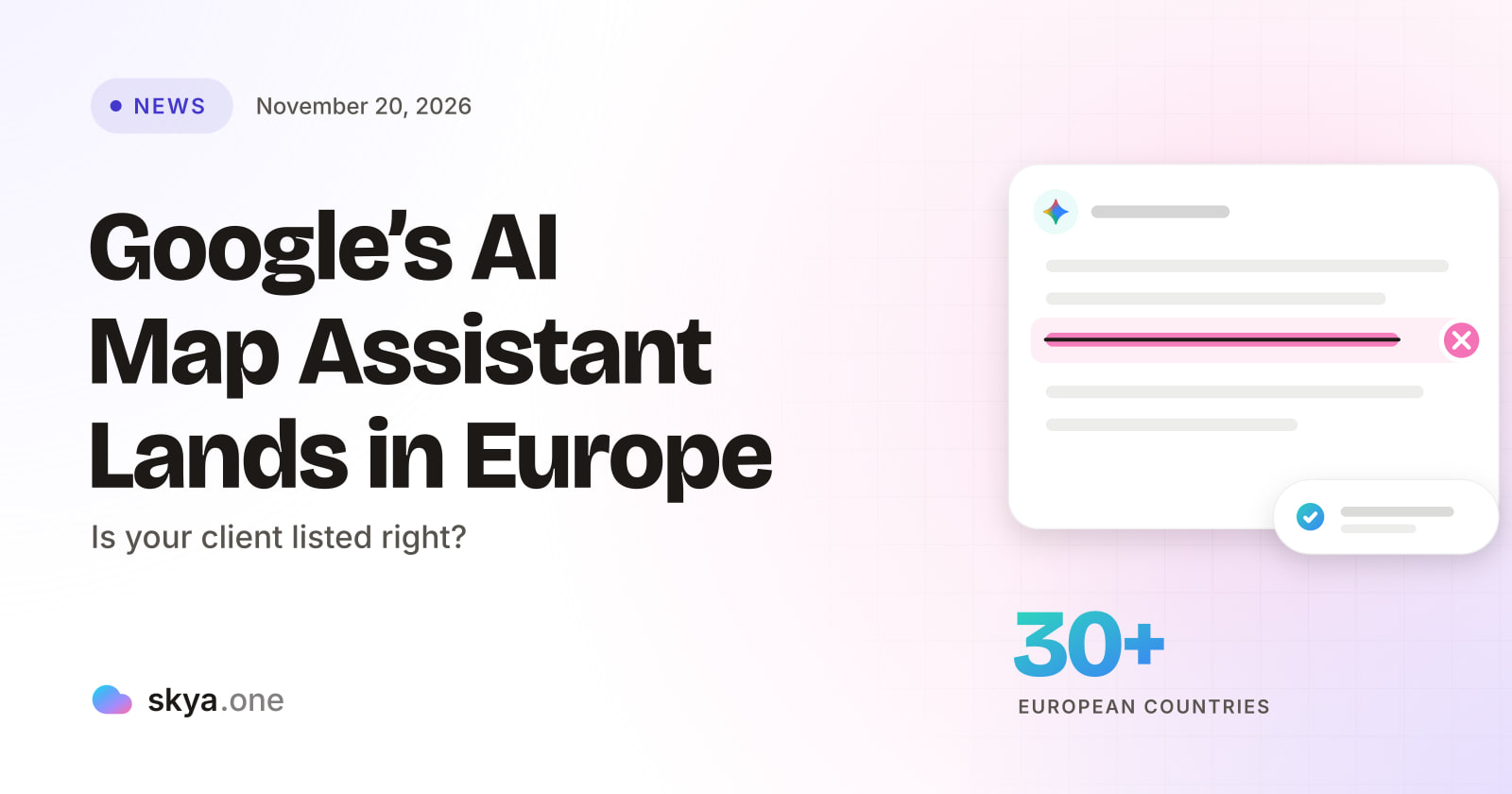
Google began expanding Ask Maps, its Gemini-powered question feature in Google Maps, to more than 30 European countries on November 16, 2026. It answers from business profiles and reviews. So a wrong hour or a missing attribute can become a wrong answer. Local clients should check their listings now and fix AI hallucinations about my brand at the source.
What Did Google Announce?
PPC Land reports that Google’s European post says Ask Maps is expanding to “30+ countries across Europe”, starting “Now”. Google’s European announcement names no countries. A same-day holiday post names Spain, Germany and the UK and repeats the count. No full list has been published.
Ask Maps is a conversational feature in Google Maps. Google’s examples include finding a phone charger or a lit tennis court, building trip itineraries and searching saved lists by availability. Google says it draws on information about more than 300 million places and on reviews from more than 500 million contributors.
That last pair of figures comes from Google. The article does not verify them independently.
What the Reports Do Not Say
| Question | What is known |
|---|---|
| Which countries are covered? | “30+”, with Spain, Germany and the UK named elsewhere |
| Which languages work? | Not stated |
| Is desktop included? | Not stated |
| Do European users get food ordering or hotel discovery? | Not stated. Both were US-only at their launches |
| Do route tips arrive in Europe? | A holiday post says they launch in the US first |
| Are there ads in Ask Maps? | Neither post mentions ads |
| How is personal data handled under European rules? | Not stated |
| Why did Europe come later than other regions? | No reason given |
Eight gaps. They matter because agencies will be tempted to describe the European version using what they know of the US one. The coverage does not support that. Describe what is announced and test the rest.
Why Local Clients Should Care
Until now, a Google Maps listing worked like a pin. A buyer saw a name, a rating and some hours, then decided. Ask Maps changes the form. The listing becomes a source for a spoken or written answer. A buyer asks a question and gets a recommendation, not a list of pins.
According to PPC Land’s analysis, business profiles and reviews of European shops, restaurants and service providers now feed AI answers, and listings missing structured data, such as reservation or attribute data, may be less likely to surface. The same piece notes that decisions about moderating reviews could affect which businesses get named. These are the article’s views, not Google’s statements.
Here is the inference, labeled as one. If an answer is built from profile fields, then a wrong field can become a wrong sentence. An old opening hour, a closed branch still marked open or a missing “wheelchair access” attribute may all be repeated with confidence. No report cited here shows it happening in Europe yet. It follows from how the feature is described.
Is That a Hallucination?
Strictly, it depends on the cause. If the answer invents a fact that appears nowhere, that is a hallucination. If it repeats a wrong fact from a profile, it is an error that came from a source. Buyers cannot tell the difference, and the cost to the client is the same.
That distinction guides the fix. An invented claim needs a clear, dated statement of the right fact on the client’s own site. A copied claim needs correction at its source. Either way, the first step is to see the answer. SKYA made the same point in its post on the Google booking button: a fact the client never approved can reach buyers through an AI platform the client does not control.
How to Fix AI Hallucinations About My Brand, Step by Step
The phrase is common in search because owners feel the problem before they can describe it. The fix follows a simple order.
First, confirm the claim is really wrong, with a dated copy of the answer. Second, find where the wrong fact comes from. Third, correct that source and the places that copy it. That is how you fix AI hallucinations about my brand at the root. Fourth, state the right fact in plain sentences on one page of the client’s site, with a date. Fifth, add schema markup so machines read the facts cleanly. Sixth, re-check after seven days.
Two cautions apply. Do not expect an instant change. Assistants refresh on their own schedule. And do not assume that one fix covers every product. Ask Maps, Google’s AI Overviews and ChatGPT read different sources, so check each.
A One-Hour Check for Every European Local Client
-
Open Google Maps in the client’s market. Search the client’s name and category. Note what the listing shows: hours, phone, website, attributes, photos.
-
Compare each field with the client’s real facts. Mark each right, old, wrong or missing.
-
Check holiday hours first. The holiday season is when hours change and when Ask Maps is promoting seasonal planning.
-
Read the ten most recent reviews. Note any that repeat a wrong fact, such as a closed service or a price.
-
If Ask Maps is live in the client’s country and language, ask it three plain questions: “Is [client] open on Sunday?”, “How do I book at [client]?” and “What does [client] offer?” Save each answer with the date.
-
Ask the same questions in two other assistants. Compare every claim.
-
If a wrong claim appears, trace it. Start with the profile, then the client’s website, then the main directories. Fix the source.
-
Repeat after seven days.
Step three is easy to miss. A feature that promotes holiday planning increases the cost of a stale hour.
Which Clients Are Most Exposed
Some clients carry more risk. The ones with the most to lose are those whose buyers act fast and whose facts change often.
Restaurants, cafes and bars come first. Their hours shift with seasons and holidays, and buyers decide within minutes. Hotels and guesthouses come second, since a wrong check-in time or a missing amenity causes immediate complaints. Clinics, salons and repair services come third. Their booking route often runs through a phone number or a third-party tool, and an old number sends buyers nowhere. Tour operators and activity providers sit in the same group, especially in tourist regions where buyers plan trips with an assistant.
For each, write the real facts in one plain paragraph: hours, address, phone, booking method, main services and any accessibility notes. If the profile, the website and the assistants all agree with that paragraph, the client is safe. If any one disagrees, you have found the work.
How to Write the Fix So It Lasts
A fix that states the right fact once is easy to lose. A fix that states it clearly, in several places, with dates, tends to last.
On the client’s website, give the key facts their own short section. Name the real booking method. Add the date you last checked it. On the Business Profile, make sure the fields match that page. In directories, use the same wording. Then add schema markup so machines can read the facts without guessing.
The goal is agreement. Assistants weigh sources against each other. When five places say the same thing, a stray old copy carries less weight. That is not a guarantee, and nobody outside the assistants can say how they weigh sources. It is the most reliable approach available to an agency. SKYA explains the wider cost of leaving errors in place in its guide to why AI hallucinations about a client matter.
Why One Check Is Not Enough
Profiles change. Reviews arrive daily. Features roll out in stages, and the Ask Maps details for Europe are still unclear. A page that is right today can be wrong next month, and an answer that is right today can change after an update.
You need a series. That is the idea behind AI hallucination monitoring: asking fixed questions on a schedule, saving each answer and comparing it with the facts. AI hallucination monitoring catches a change on the day it happens, not on the day a customer complains. SKYA’s note on hallucination monitoring over time explains why trends matter more than snapshots.
Local clients benefit most. Their facts move, their buyers act quickly and a wrong hour costs a visit. A habit of AI hallucination monitoring is cheaper than a lost booking.
A Critical Look at “Be Found in Maps AI”
Expect a wave of advice promising to optimize clients for Ask Maps. Read it with care.
The product reached Europe days ago. Its country list is incomplete. Its language coverage is unstated. Nobody outside Google can say how it weighs profile fields against reviews, or how often it names one business over another. Any guide that claims a ranking recipe is guessing.
What an agency can say is narrower and safer. Keep profile facts correct. Keep the website consistent with them. Watch what answers say. Report what you see. That advice does not depend on how Ask Maps works inside, and it holds up if the product changes next month.
What to Ask Any Vendor
A tool for this work has to check facts, not only count mentions. SKYA does not read Ask Maps today, so say so in any client note and ask every vendor what it covers.
| Requirement | Why it matters | How SKYA handles it |
|---|---|---|
| Checks claims against the client’s facts | A named client can still be described wrongly | A hallucination audit on every paid plan |
| Keeps answer text with dates | You must show when a wrong claim appeared | Dated answer readings and a stated basis for measured results |
| Reads many assistants | Each one draws on different sources | Readings across supported AI platforms; coverage and cadence depend on the plan |
| States what it does not cover | A silent gap looks like full coverage | No answers read means no figure. A run that measured nothing gives its credit back |
| Fits agency work | Many local clients, one report | Multi-client workspaces, GA4 and Search Console integration and white-label PDF reports |
SKYA publishes how every number is calculated. Its page on AI hallucination shows what the audit checks.
What to Tell Clients
Be plain and calm. Google has started rolling out an AI map assistant across Europe. It answers from business profiles and reviews. We checked your listing, here is what we found and here is what we changed. We will keep checking.
Do not blame the client. Do not promise Google will show them first. The useful promise is a record: dated checks that show a problem when it appears and show the fix when it lands.
Frequently Asked Questions
What is Ask Maps?
Ask Maps is a Gemini-powered conversational feature in Google Maps. It answers questions about places, builds itineraries and searches saved lists. Google says it draws on more than 300 million places and reviews from more than 500 million contributors.
Which European countries get Ask Maps?
Google says “30+ countries across Europe”. Spain, Germany and the UK are named in a holiday post. No full list or language list has been published.
Can Ask Maps repeat wrong business information?
It is a plausible risk, since it draws on profiles and reviews. No report confirms specific errors in Europe yet, so test it and compare each answer with the client’s real facts.
How do I fix AI hallucinations about my brand?
Confirm the wrong claim with a dated copy, find its source, correct that source, state the right facts plainly on one page, and re-check after seven days across several assistants.
What does ongoing monitoring add to a local listing check?
It stores what assistants said, with dates, and compares each claim with the client’s facts. That shows when a wrong hour or attribute appears, not only whether the listing looks right today.
Check the client’s facts across supported AI platforms. Start a 7-day free trial with SKYA. No card required. SKYA does not read Ask Maps today.

Written by
SKYA Editorial Team
The SKYA Editorial Team publishes field-tested research on Answer Engine Optimization, Generative Engine Optimization and AI Visibility. Every article is reviewed by senior practitioners from the SKYA product and research groups before publication.
Related posts
Keep exploring the SKYA Journal.