On this page7
- Why this exposes a blind spot most brands do not know they have
- Why Perplexity is the clearest place to check
- How to appear in AI answers when you target multiple markets
- Why this compounds with every other model update
- How agencies working across countries should think about this
- How to track this instead of finding out from a lost regional deal
- Frequently asked questions
Quick Answer Probably not, if your content only exists in English. Gemini 3.9 Ultra now handles non-English queries with genuine fluency, so a buyer in Germany or France gets a confident answer in their own language, and your brand appears only if something in that language exists for the model to find and trust. Check visibility per language, not per brand name.
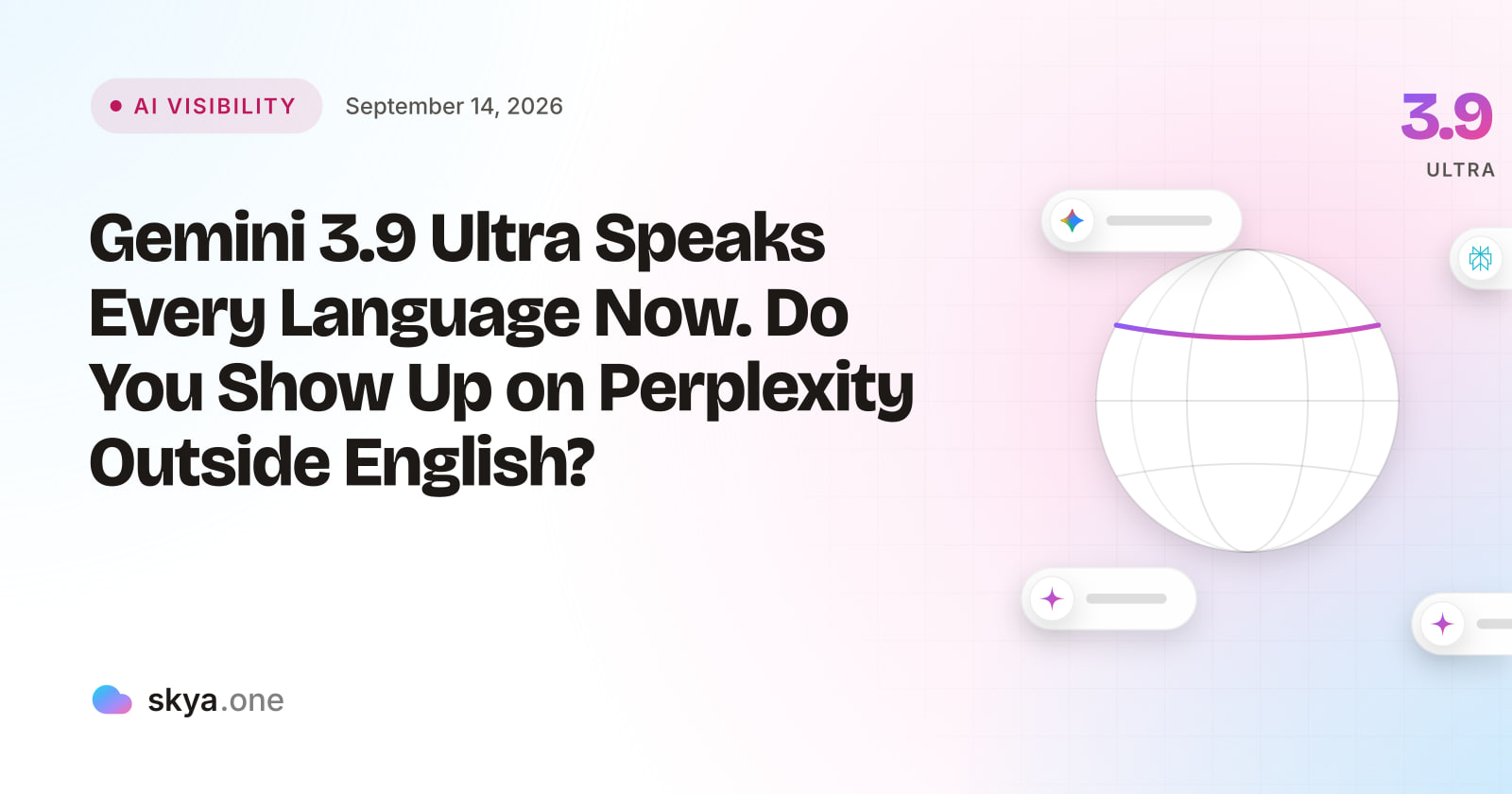
Google DeepMind gave Gemini 3.9 Ultra real time multilingual reasoning as a headline feature, a substantial jump from earlier models that handled non-English queries noticeably worse than English ones. For brands operating across Europe, this is a significant shift, not a minor technical footnote.
Why this exposes a blind spot most brands do not know they have
Most AI visibility efforts, to the extent they exist inside a marketing team at all, are checked in English, occasionally, usually only on one platform. But Perplexity, Gemini and Claude all serve substantial non-English query volume every day, and none of them automatically translate an English-only brand presence into a fair answer for someone asking in a different language, since each AI platform pulls from a different pool of cited sources for the same question.
If your content, comparison pages and citable facts exist only in English, a multilingual capable model is statistically more likely to surface a competitor who does have a non-English footprint, purely because that is what its retrieval process turns up.
Global search behavior data backs this up. A 2026 AI traffic share report found India and Southeast Asia are the fastest growing regions for AI referral traffic, with growth exceeding 200% year over year. If your visibility strategy stops at English, you are missing the fastest growing part of the shift.
Why Perplexity is the clearest place to check
Perplexity's answer format is unusually citation heavy compared to a typical chat model, which makes it one of the clearest windows available into whether your brand has enough of a footprint, in any given language, to be cited at all.
Ask it a real buyer intent question in your category, in the language your target buyer would actually use, and check the cited sources. If your brand does not appear among them, that is a direct, visible gap you can see with your own eyes.
How to appear in AI answers when you target multiple markets
Check your visibility per language, not just per brand name. Running a brand name through a model in English tells you almost nothing about how the same buyer intent performs when it is expressed in French or German.
Do not rely on machine translated pages alone. A page run through an automated translator is a comparatively weak retrievable source. Models weigh native language clarity and genuine third party corroboration in that same language considerably more heavily.
Prioritize markets deliberately rather than covering everything at once. For a brand prioritizing the EU market first and the US market second, multilingual AI visibility tracking should be core infrastructure from the start.
Track citation patterns, not just raw mention counts. Use that visibility to identify concrete content gaps broken down by both language and region, rather than treating AI visibility as one undifferentiated metric.
Why this compounds with every other model update
Gemini 3.9 Ultra's multilingual leap does not happen in isolation. It is shipping in roughly the same window as a major cost reduction on one rival frontier model and an extended context window on another, which together make thorough, multi source, multi language synthesis genuinely possible in a single answer.
AI search is becoming more global and more thorough at the same time, a combination that rewards brands with a real, verifiable multilingual footprint and quietly erases the visibility of brands without one.
How agencies working across countries should think about this
If you manage AI visibility for clients operating in several markets, the language dimension multiplies your tracking surface considerably. A client visible in English but invisible in German is not fully covered, even if the dashboard shows a healthy overall mention count. Only about 30% of brands stay visible in AI answers from one response to the next, and that volatility compounds once you add multiple languages and markets to the tracking surface.
Multi client, multi region workspaces let one team track this properly across up to 15 projects without a separate tool or a separate manual process per market.
How to track this instead of finding out from a lost regional deal
SKYA's AI Search Intelligence platform runs continuous tracking across ChatGPT, Gemini, Perplexity and Claude with auto refresh monitoring, surfacing exactly where and in which contexts your brand is or is not cited, across the specific markets that matter to your business rather than a generic global average that hides real gaps.
The takeaway is straightforward. Appearing in AI answers used to be, functionally, a single market question for most brands. Multilingual reasoning just made it a genuinely multi market one. Brands that keep checking only their English language visibility are now flying blind on a rapidly growing share of the AI search traffic their buyers generate every day.
Frequently asked questions

Written by
SKYA Editorial Team
The SKYA Editorial Team publishes field-tested research on Answer Engine Optimization, Generative Engine Optimization and AI Visibility. Every article is reviewed by senior practitioners from the SKYA product and research groups before publication.
Related posts
Keep exploring the SKYA Journal.