On this page13
- What Was Spotted
- Why Gemini Traffic Was Hard to Attribute
- What UTMs Can and Cannot Do
- What About ChatGPT?
- How to Check Your Own Reports
- Mueller Asked for Referrers Too
- Mistakes Agencies Will Make With the New Tags
- Why Not Wait for Google to Document It?
- What an AI Brand Monitoring Tool Must Add
- A Report That Joins Visits and Answers
- Questions a Client Will Ask
- What to Tell Clients
- Frequently Asked Questions
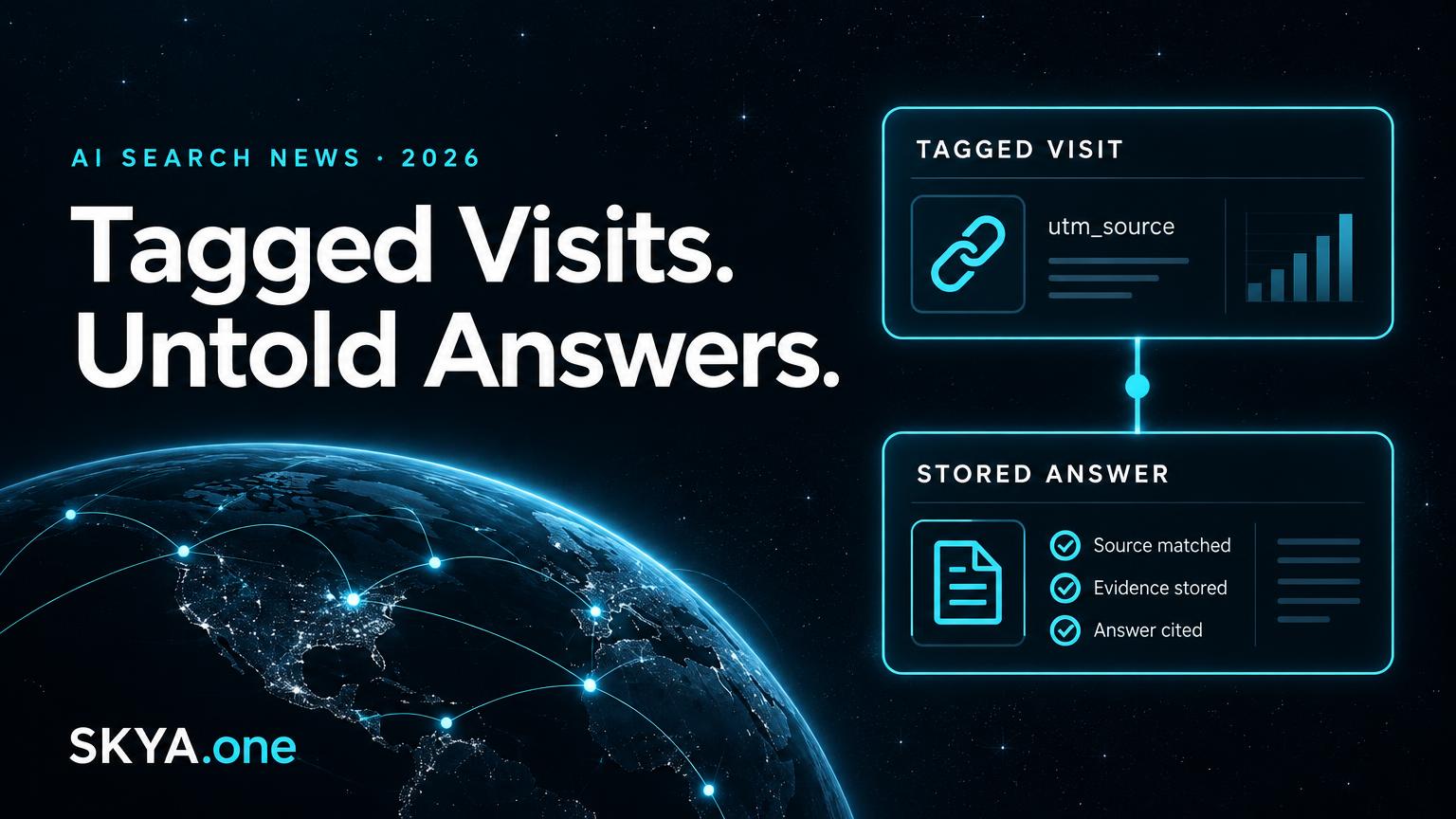
Google appears to have added UTM parameters to links in Gemini answers. A Reddit user spotted it and Google’s John Mueller replied that he saw it too. Google has not documented the change. UTMs show which visits came from Gemini. An AI brand monitoring tool shows what Gemini said before the visit. A client needs both.
What Was Spotted
Search Engine Journal reported the change on October 1, 2026. A Reddit user noticed that outgoing links from Gemini carried UTM parameters. The post described the change as very new, about a day old. Mueller answered: “Nice. I see it too.”
The article’s subheading says Google confirms the change. The support for that is Mueller’s reply. The article also says the implementation is undocumented. Treat this as an observed change that a Google employee acknowledged, not as a launch. Nothing in the report says how long the tags will stay or whether they apply everywhere. Do not treat them as a stable data feed until Google documents them.
| Question | What the report says |
|---|---|
| Who spotted it? | A Reddit user |
| Who acknowledged it? | Google’s John Mueller, who wrote “Nice. I see it too.” |
| Is there an official Google page? | No official announcement is cited, and the article says the implementation is undocumented |
| Which UTM values are used? | The article does not name them |
| Which products does it cover? | The article covers Gemini and its outgoing links only |
Why Gemini Traffic Was Hard to Attribute
The report explains the problem. When a visit arrives with no referrer and no UTM data, analytics falls back to direct. Gemini visits can end up in GA4’s direct bucket this way. An agency sees a visit, but not where it came from.
That is a problem for reporting. A client asks whether AI assistants send any traffic. The honest answer used to be “some, but we cannot separate it.” Clean tags would let an agency compare Gemini visits with other AI sources and with traditional search.
| Situation | What GA4 sees | What the agency can report |
|---|---|---|
| Link with no referrer and no UTM | Direct traffic | A visit of unknown origin |
| Link with a UTM tag | A named source | A visit from a stated source |
| No click at all | Nothing | Nothing |
The last row deserves attention. A buyer can read a Gemini answer, remember the client’s name and search for it later. That buyer may never produce a tagged visit. A tag cannot count a click that never happened.
What UTMs Can and Cannot Do
UTM tags answer one question well: which source sent this visit? They cannot answer the questions a client asks first.
| Client question | UTM tag answers it? | What answers it |
|---|---|---|
| Did Gemini send us visits? | Yes, if the tag is present | GA4 |
| Did Gemini name us? | No | A stored reading of the answer |
| Was what Gemini said correct? | No | A claim check on the stored answer |
| Which rivals appeared beside us? | No | The stored answer text |
| Did we lose ground this week? | Partly, for visits only | Daily readings with history |
This is the gap an AI brand monitoring tool fills. GA4 counts what arrived. A reading of the answer records what the assistant said to the buyer who may or may not have clicked.
What About ChatGPT?
The same article makes a point about ChatGPT. It says ChatGPT adds UTMs only to links in answers grounded in web sources, not to answers drawn from training data. The detail matters for attribution. Two assistants can both send traffic, and each can tag it under different conditions.
| Assistant | Tagging, per the report | Documented? |
|---|---|---|
| Gemini | UTMs now appear on outgoing links | No, per the article |
| ChatGPT | UTMs on links in web-grounded answers only | Not covered in the article |
Do not build a report on the assumption that tagging is complete. The article itself says it is unclear when Gemini adds the tags, so the data’s completeness is unknown.
How to Check Your Own Reports
Google has not published the tag values, so do not guess them. Check what your own data shows.
-
Open GA4 and compare traffic sources before and after late September 2026. Look for new source or medium values.
-
Click a link from a Gemini answer yourself. Watch what appears in the address bar and in real-time reports.
-
Write down the exact values you see and the date you first saw them. Keep that note with the report.
-
Compare direct traffic before and after. A fall in direct traffic with a new named source may be related. Do not call it proof.
-
Re-check monthly. The behaviour is undocumented and may change without notice.
This routine gives you a defensible record. It says what you saw, when you saw it and what you did not know. It is also the base for AI visibility tracking across several assistants, because each assistant tags its links differently.
Mueller Asked for Referrers Too
One more detail in the report is easy to miss. Mueller said he would like referrer data kept alongside the UTM tags: “It would be great to have these retained (in addition to the UTM-tagging).” That is a wish from a Google employee, not a commitment. It shows the setup is not final.
For agencies, the lesson is practical. Do not hard-code a report around today’s tags. Keep the logic flexible and record which version of the behaviour each month’s data came from.
Mistakes Agencies Will Make With the New Tags
A new data source invites quick conclusions. Four habits are likely to cause trouble.
| Mistake | Result | Better move |
|---|---|---|
| Treating the tags as complete | Visits are undercounted | State that completeness is unknown |
| Reporting new tagged visits as growth | Growth that is only a relabel | Compare direct and tagged traffic together |
| Hard-coding today’s tag values | The report breaks when Google changes them | Record the values and the date each month |
| Dropping the answer reading | No view of what Gemini said | Keep both the visit count and the stored answer |
The second row needs one more line. A visit that used to land in direct and now carries a tag is the same visit with a new label. While the change settles, report direct traffic and tagged AI traffic together. Then a rise in one and a fall in the other will not look like growth.
Why Not Wait for Google to Document It?
Clients ask about AI traffic now. A dated note of what you saw is better than a pause. Write down the observation, the date and the open questions. When Google documents the behaviour, update the note. If Google changes it first, the note shows when your data shifted.
What an AI Brand Monitoring Tool Must Add
Visit counts are half of the story. A good tool supplies the other half. Five requirements matter.
| Requirement | Why it matters | How SKYA handles it |
|---|---|---|
| Reads the answer text | A tag cannot show what was said | A stored reading behind every number, with an evidence panel |
| Reads many assistants daily | Visits come from several assistants | Nine assistants every day: ChatGPT, Gemini, Perplexity, Claude, Google AI Overview, Google AI Mode, DeepSeek, Grok and Copilot |
| Sits beside analytics | The agency reports visits and answers together | GA4 and Search Console integration |
| Admits what it cannot read | An invented number misleads the client | No answers read means no figure. A run that measured nothing gives its credit back |
| Reports by client | Agencies manage many accounts | Multi-client workspaces and white-label PDF reports |
SKYA publishes how every number is calculated. For the idea behind reading several assistants at once, see why five AIs judge your client.
A Report That Joins Visits and Answers
| Section | Source | What the client learns |
|---|---|---|
| Visits from AI assistants | GA4, with the tag dates noted | How many visits arrived and from which labelled source |
| Mentions and citations | Daily answer readings | Whether the client is named and cited |
| Accuracy | Claim check on stored answers | Which statements were wrong |
| Rivals in the same answers | Stored answers | Who appears beside the client |
| Fixes made | Agency notes | Which pages and sources changed |
Together these sections turn a vague traffic line into a story. The client sees the answer, the visit and the fix on one page. That is the kind of AI visibility tracking that survives a hard question.
Questions a Client Will Ask
| Question | Plain answer |
|---|---|
| Is Gemini sending us traffic? | Possibly. Google appears to tag links now, so we are checking your reports for new labelled sources. |
| Why does the number look small? | Some buyers read an answer and never click. Tags count clicks only. |
| Can you prove Gemini helped? | We can show the stored answer and any tagged visit. We will not claim more than the data shows. |
| What if Google changes the tags? | We keep a dated note and adjust the report. Your history stays readable. |
| How do we track the answers? | AI visibility tracking reads the assistants daily and stores each answer, so you can see what changed. |
Plain answers build trust. A client who hears “we do not know yet, here is how we will find out” trusts the next number more.
What to Tell Clients
| Say | Avoid |
|---|---|
| Google appears to tag Gemini links now. We are checking your reports and will note when we first saw the tags. | Gemini traffic is now fully measurable. |
| Tags count visits. They do not show what Gemini said about you. We read that daily. | The new tags tell us everything. |
| The behaviour is undocumented and may change. We will flag any change. | This is permanent. |
| Some buyers read an answer and never click. We track the answer too. | No tag means no impact. |
Frequently Asked Questions
Does Gemini add UTM parameters to links?
It appears to. Search Engine Journal reported on October 1, 2026 that outgoing Gemini links carried UTM tags, and Google’s John Mueller said he saw it too. Google has not documented the change.
Which UTM values does Gemini use?
The report does not name them. Check your own GA4 data for new source or medium values, and record the date you first see them.
Where did Gemini traffic show up in GA4 before?
The report says visits with no referrer or UTM data can fall into the direct bucket. That makes Gemini visits hard to separate from other direct traffic.
Can UTM tags show what Gemini said about my client?
No. A tag identifies the source of a visit. To read the answer and check it for accuracy, an agency needs stored readings of the assistant.
What is an AI brand monitoring tool?
An AI brand monitoring tool reads what AI assistants say about a client and records whether it is named, cited and accurate. SKYA does this daily across nine assistants and stores the answer behind every number.

Written by
SKYA Editorial Team
The SKYA Editorial Team publishes field-tested research on Answer Engine Optimization, Generative Engine Optimization and AI Visibility. Every article is reviewed by senior practitioners from the SKYA product and research groups before publication.
Related posts
Keep exploring the SKYA Journal.